
How to interpret intestinal yeast findings
Learn what intestinal yeast in a report may indicate, why it does not confirm infection, and when to discuss the finding with a healthcare professional.
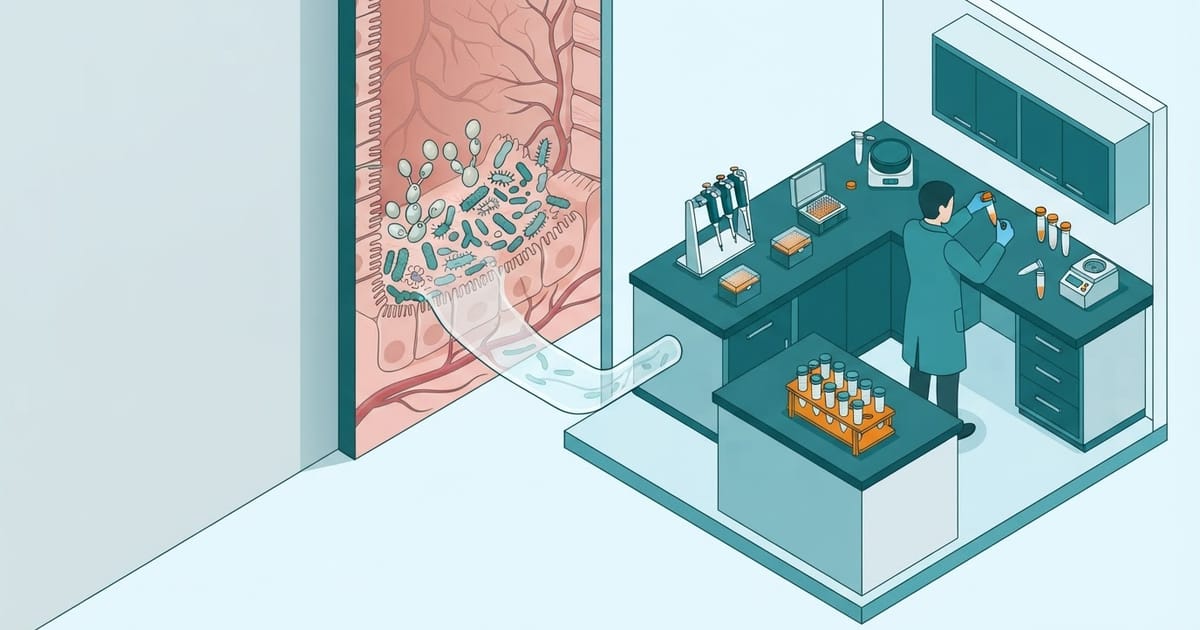
If a report mentions intestinal yeasts, that finding alone does not demonstrate an infection or mean that treatment is needed. Its significance depends on the technique used and the clinical context, so it should be reviewed with a healthcare professional.
In summary:
- Detecting yeasts in an intestinal sample is not, on its own, enough to conclude that an infection is present.
- Digestive symptoms alone do not identify the cause; a healthcare professional should also consider the person’s medical history and other test results.
- A microbiota analysis provides information about the microorganisms detected, but it does not replace a healthcare professional’s diagnostic assessment.
- Finding yeasts in a report is not sufficient reason to start antifungal treatment without clinical assessment.
To understand what an intestinal microbiota analysis can tell you, it is important to distinguish what the test detects from what can be concluded clinically.
What does it mean to find yeast in an intestinal sample?
Finding yeast in an intestinal sample means that the method used has detected signals consistent with these microorganisms. On its own, this result does not establish that they are causing an infection, because detecting their presence and establishing that they are causing disease are different conclusions that require clinical interpretation.
Colonisation describes the presence of a microorganism without, on its own, showing that it is causing disease. Therefore, a report that mentions yeast does not automatically amount to a diagnosis of Candida infection or justify starting treatment.
To understand what the result indicates, it is worth reviewing what the test actually identifies and how it reports its findings. If the report needs explaining, you can consult the information about Sophia, the clinical AI, bearing in mind that interpretation does not replace assessment by a healthcare professional. The relevance of yeast depends on how the finding fits with the clinical situation; it cannot be determined solely by the name of the microorganism.
What symptoms and medical history should a healthcare professional consider?
Digestive symptoms such as abdominal pain, bloating, changes in bowel movements or nausea do not, on their own, show that yeast is causing the discomfort. A healthcare professional will consider them alongside how they have changed over time, medical history, medications and other test results before deciding which clinical explanation is most likely.
To help guide the consultation, it is useful to explain clearly:
- When the symptoms began and how they have changed.
- Which symptoms occur, how often and in what circumstances.
- Which medications are being taken or have been taken, and what treatments have been tried.
- Which medical history and relevant test results may be important.
It is also useful to bring the full report, not just the mention of yeast. If further tests are being considered, understanding what information each marker provides can help clarify what it can tell you; you can read this guide on how to choose clinical biomarkers. The healthcare professional will assess the case and decide whether other tests are needed.
How are intestinal yeasts studied?
Intestinal yeasts can be studied using culture, molecular tests or sequencing, but each method answers a different question: culture looks for microorganisms that grow under laboratory conditions, while molecular techniques identify genetic material. Their results are therefore not directly equivalent.
Culture indicates whether growth occurs under the conditions used. A molecular test can detect specific genetic sequences, and metagenomic sequencing analyses the genetic material present in the sample. Detecting a genetic signal does not, on its own, confirm that the microorganism is viable or that it explains the symptoms.
When interpreting a report, it is worth checking which technique was used, which microorganisms it could detect and what limitations the laboratory states. Metagenomics and biochemistry, for example, provide different types of information; you can read more about what each test can tell you. No method turns a finding into a diagnosis on its own: the result should be assessed in light of the relevant clinical information.
How should you interpret a report result?
A result that mentions yeasts should be interpreted by reviewing which microorganism or signal is reported, which technique was used, and the limitations explained by the laboratory. On its own, it does not establish a diagnosis or determine whether treatment should be started, and it should be considered alongside the clinical assessment.
Then review these points in the report itself:
- The identification: whether it names a specific species or a broader category.
- The technique stated and the type of signal it analyses.
- The limitations the laboratory attributes to the result, and whether it reports presence, quantity, or interpretation.
- How the result relates to the clinical assessment and any other available tests.
If you want to understand what information an approach combining microbiome and function can provide, see the integrated microbiome profiles. If a label is unclear or a conclusion does not explain its limitations, ask the laboratory for clarification and review the result with the healthcare professional familiar with the case. Interpretation should take the full clinical picture into account, not just the name of a microorganism in the report.
What steps should you take if the report mentions yeasts?
If the report mentions yeasts, review it with a healthcare professional before drawing conclusions. Check which method was used, which microorganism or signal is described, and what limitations the laboratory notes. A clinical assessment will determine whether the finding needs clarification or further testing; by itself, it does not mean you should start treatment.
To prepare for the appointment:
- Check whether the report identifies a species or describes a general signal. If this is unclear, ask what the test measures.
- Write down your questions and share the full report with the professional assessing your case.
- Ask whether the result needs confirmation or whether other assessments may be appropriate.
- Do not start antifungal treatment on your own; ask whether it is indicated first.
If you would like to understand what a Xenogene analysis can offer, contact the team.
Frequently asked questions
Does a positive result for Candida in stool mean I have candidiasis?
Not necessarily. The result indicates that the test has detected Candida or signals consistent with it, but it does not by itself show that the microorganism is causing an infection. To assess its significance, a healthcare professional should consider the method used, your symptoms and your clinical context.
Should I change my diet if a report detects yeast?
Do not change your diet based solely on this finding. On its own, the result does not establish that yeast is causing symptoms or determine what diet would be appropriate. If you have symptoms or concerns, consult a healthcare professional before making changes so they can assess the report alongside your clinical situation.
Should antifungal medication be taken when yeast is found in a test?
You should not start antifungal medication solely because a report mentions yeast. This finding is not enough to establish that an infection is present or that treatment is appropriate. The decision rests with a healthcare professional, who can assess the result and your symptoms and decide whether further tests are needed.
What information should I bring to an appointment to review the result?
Bring the full report and, if available, information about the method used and the type of sample analysed. Also explain what symptoms you have, when they started and any relevant medical history or treatments. This will help the healthcare professional interpret the finding in context and decide whether further assessment is needed.
Other related tests
- Microbiota Esencial
Análisis metagenómico clínico dirigido a la evaluación cuantitativa y cualitativa de los 150 microorganismos intestinales más relevantes para la salud humana.
- Metabolómica funcional
Cuantificación por GC-MS de los ácidos grasos de cadena corta (butirato, propionato, acetato) para evaluar la actividad funcional real de la microbiota intestinal.
- Calprotectina fecal
Marcador validado de inflamación de la mucosa intestinal que ayuda a diferenciar la patología orgánica del trastorno funcional y a orientar la indicación de colonoscopia.