
A five-step guide to liquid biopsy in cancer
Learn which clinical question to define and how to interpret the limits of liquid biopsy in cancer before discussing the test with your medical team.
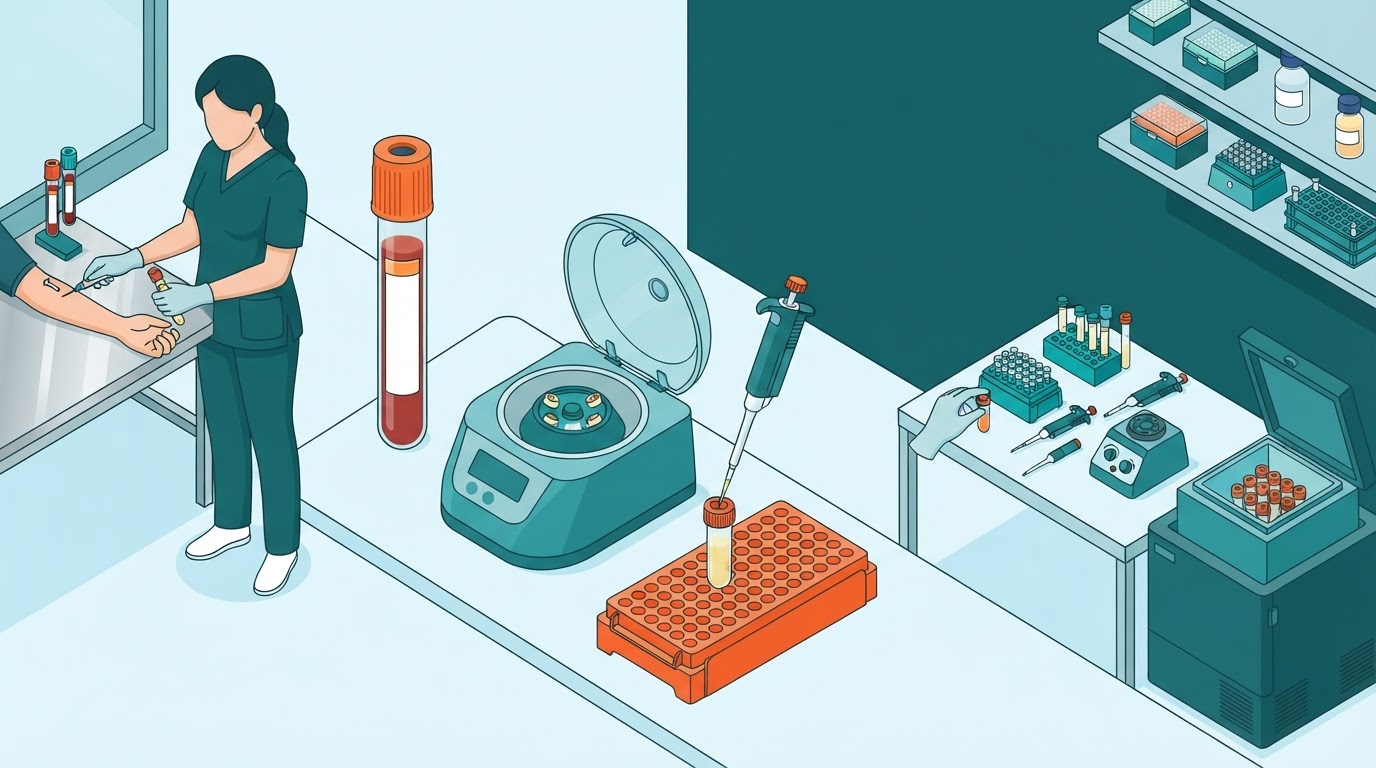
When the medical team needs to assess molecular information about a tumour, liquid biopsy can complement other tests and help inform some treatment decisions. Its usefulness depends on the type of cancer, the clinical question and how the result is interpreted.
In summary:
- Liquid biopsy analyses tumour material present in a blood sample and can provide molecular information if that material is detectable.
- Depending on the cancer and the clinical question, the results may help the medical team assess treatment options or molecular changes.
- A negative result does not always rule out tumour alterations; it should be interpreted in light of the analysis’s characteristics and limitations.
- Liquid biopsy complements clinical assessment, but does not on its own replace diagnosis or the judgement of the healthcare team.
The first step is to clarify which decision the test is intended to inform and check whether the analysis is appropriate. The result should then be assessed alongside the clinical situation and other available tests.
What clinical question should be defined before ordering a liquid biopsy?
Before ordering a liquid biopsy, the medical team should clarify which clinical decision the test is intended to inform and check that the available assay can answer that question for the tumour and the person’s situation. It is not enough to request a molecular analysis without defining what result would be useful and how it could be interpreted.
The question may be whether to look for a specific molecular alteration or to explore a possible resistance mechanism. These are different objectives: it should not be assumed that every assay covers both or is relevant to every tumour.
Before ordering the test, it is worth confirming what it analyses, whether the report could answer the question being asked, and what steps might be considered if the result does not resolve the uncertainty. It is also useful to agree on how the findings will be considered alongside the rest of the medical assessment. The VERUM service page provides information published by Xenogene about this test.
What information can a blood test provide?
A liquid biopsy analyses tumour material in a blood sample and, depending on the assay, may provide molecular information if it detects circulating tumour DNA (ctDNA): fragments of genetic material of tumour origin present in the sample.
Circulating tumour DNA (ctDNA) is one of the signals that some tests look for. A liquid biopsy is not a single test: assays can differ in the alterations they assess and their analytical limits. It is therefore worth checking exactly what the requested test looks for; the fact that an assay can assess a particular alteration does not mean that all assays do so. The usefulness of the information also depends on the type of cancer and the clinical situation. To see other tests available, you can browse the Xenogene test catalogue.
How can a result influence treatment selection or adjustment?
A molecular finding can help the medical team assess a treatment option or a possible change related to resistance, but only if its relevance has been established for that tumour and clinical context. The result does not prescribe treatment and must be considered alongside the person’s medical history, other test results and preferences.
In practice, it is useful to review which alteration was detected, whether the test can be interpreted in relation to the clinical question, and whether there is evidence applicable to the tumour type and the person’s situation. A result associated with resistance may prompt consideration of other options or additional tests, but it does not, on its own, show that the treatment has stopped working.
The medical team is responsible for deciding whether to continue or change treatment, or to carry out further tests, based on all the available information. If there are questions about the technical scope of the analysis, you can consult the Xenogene team; treatment choices should be discussed with the responsible healthcare professional.
What does a negative or inconclusive result mean?
A negative or inconclusive liquid biopsy result means that the analysis has not identified an interpretable alteration in the sample. It does not, however, show that the alteration is absent from the tumour: there may be too little circulating tumour material, or the assay may not detect the alteration being sought.
Interpretation also depends on which alterations the test analyses and how well it can detect them. It is therefore important to review what the assay covers and whether it addresses the clinical question. An inconclusive result may also not allow a reliable interpretation.
The medical team will assess the report alongside the clinical situation and the available tests. Depending on the case, they may consider other tests, such as tissue analysis, rather than treating a negative result as confirmation that the alteration is absent. Healthcare professionals can find information about access to Xenogene analyses on the healthcare professionals page.
How is liquid biopsy incorporated into the medical team’s assessment?
The result of a liquid biopsy should be reviewed by the medical team alongside the clinical question, other available test results and each person’s circumstances. It can help guide discussion about treatment, but it does not determine on its own which option is appropriate or replace professional assessment.
During the consultation, it is useful to ask what conclusions can be drawn from the report, what questions remain unresolved and whether the findings need to be checked against other tests. If the result does not fit the clinical picture, the responsible team can assess its significance before considering any changes. A person should not change or stop treatment on their own based solely on the report. The next step depends on professional interpretation and the options available in that case.
Frequently asked questions
Does liquid biopsy replace tissue biopsy?
It should not be considered an automatic substitute for tissue biopsy. It can complement the information available, but the appropriate test depends on the type of tumour, the clinical question and the analysis available. The medical team can explain whether the liquid biopsy results are sufficient for the decision being considered or whether further tests are needed.
Can liquid biopsy be used for any type of cancer?
It cannot be assumed to be suitable for every tumour or every clinical question. Its usefulness depends on whether the available analysis can assess the material relevant to that cancer and whether the result is relevant to the medical decision. It is advisable to confirm with the healthcare team what the specific test can contribute in each situation.
Does liquid biopsy need to be repeated during treatment?
Not necessarily. The decision to repeat it depends on the clinical question, how the disease is progressing and whether the result could provide useful information for management. The medical team can assess when it might make sense to request another sample and how to interpret the result alongside other tests, without assuming that repeating the analysis is always necessary.
What should I ask my oncologist before requesting it?
You can ask what clinical decision the test is intended to inform, what material it analyses and what its limitations are for the specific tumour. It is also useful to clarify how a negative or inconclusive result would be interpreted and whether the result could change the medical assessment. The healthcare team can explain whether the test is appropriate in your situation.
Other related tests
- Clinvar
Plataforma integral para la interpretación de variantes genéticas según criterios ACMG